The Five Behaviors®

The Five Behaviors®

Building a Cohesive Team

Strong teamwork is more than having good people in the same room. Teams need to be able to speak openly, disagree productively, make clear decisions, hold each other accountable, and stay focused on shared results.

The Five Behaviors® gives you a practical framework for understanding and strengthening those dynamics. It is based on Patrick Lencioni’s best-selling book The Five Dysfunctions of a Team and comes with research-based assessments from Wiley.

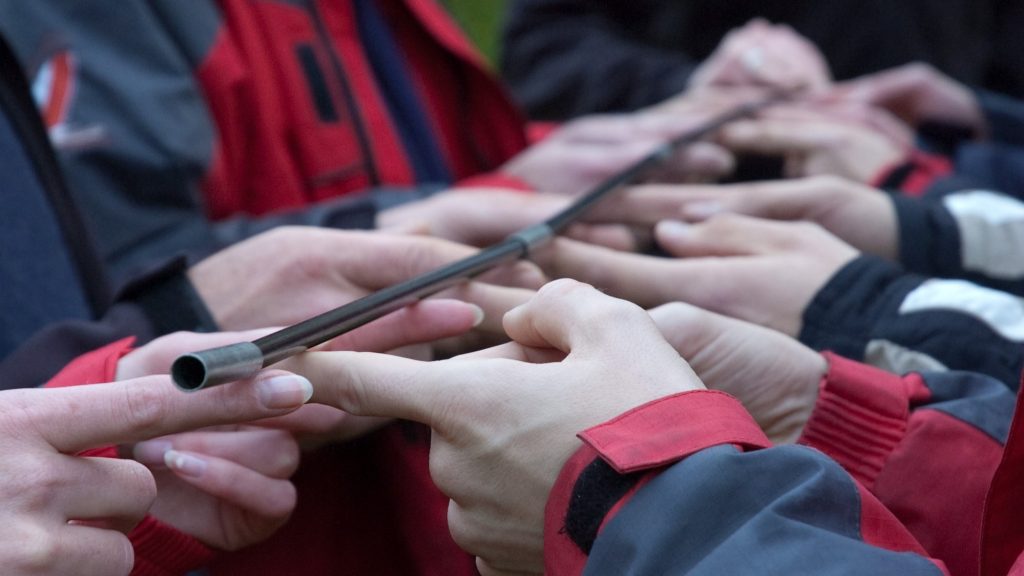
Our engaging team challenges make those dynamics tangible: your team experiences them in real time and then talks about what happened. The assessments give each participant the reflection they need to do their part in creating a healthy team.
Which Teams Benefit?

The Five Behaviors® works for teams in very different situations. These are the ones we meet most often.

Teams that want to build a strong foundation

Newly formed teams, teams with new members, or teams entering a new phase. Investing in collaboration early helps people understand each other, establish healthy ways of working, and build a strong foundation before pressure starts to expose the cracks.

Teams that are good, but could be better

Not every team needs fixing. Sometimes collaboration works well, but conversations are being avoided, decisions could be sharper, or people could take more ownership. The Five Behaviors helps identify where the team is already strong and where the next gains can be made.

Teams working under pressure

Deadlines, changing priorities, and competing interests can put even strong relationships under strain. These teams benefit from understanding what happens to their collaboration when pressure rises, and how they can maintain trust, constructive conflict, and accountability when it matters most.

Teams where collaboration has become difficult

Sometimes the signs are obvious: recurring frustrations, unresolved disagreements, unclear commitments, or too much responsibility ending up with the team leader. The Five Behaviors gives the team a shared language to explore what is happening and identify practical steps forward.

Five Layers, Built from the Ground Up

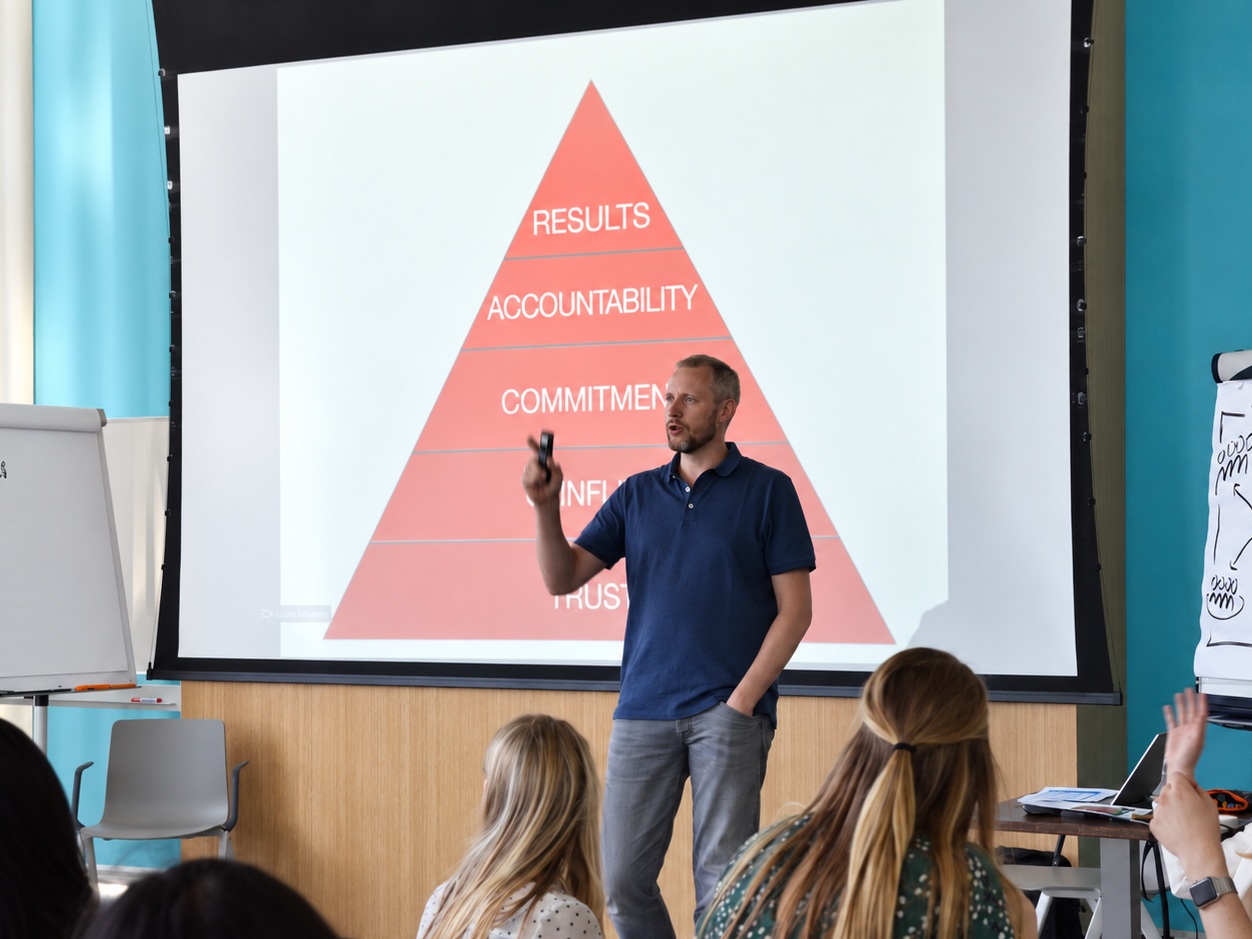
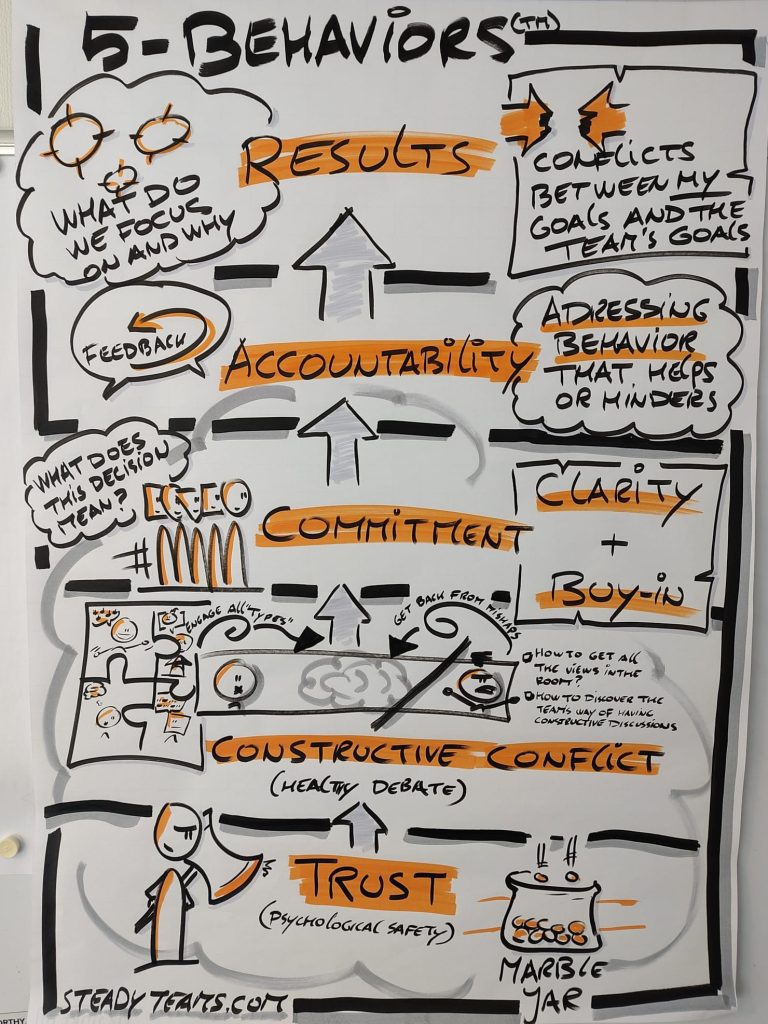
The model works like a pyramid: each behavior depends on the one below it. We work through it from the ground up, starting with trust, so every layer has a solid foundation before we build the next.

You don’t have to start by fixing everything. Look at what your team already does well, where collaboration gets more difficult, and where a relatively small change could make a real difference. Grab a pen and paper, open each layer below, and do a mini assessment for your own team.

Team members feel safe enough to be open with each other: admitting mistakes, sharing concerns, and asking for help. Without this kind of trust, the other behaviors are hard to build.

Ask yourself: How open are people about mistakes, concerns, or needing help? Where is trust already strong, and where are people still holding back?

With trust in place, the team can engage in open, productive debate around ideas. Disagreement becomes a way to reach better decisions instead of something to avoid.

Ask yourself: Can people challenge each other’s ideas and address difficult issues, or are some conversations being avoided?

When people feel heard, they are more willing to commit to decisions, even without full consensus. Everyone knows what was decided and is ready to move forward.

Ask yourself: When decisions are made, is everyone clear on what was decided and prepared to move forward?

Team members hold each other accountable for agreements and behavior, so it does not all fall back on the team leader.

Ask yourself: Do team members address issues with each other, or does accountability mostly fall back on you as the leader?

The team keeps its attention on collective results, above individual or departmental goals.

Ask yourself: When priorities compete, does the team keep its focus on the shared result, or do individual goals and interests take over?

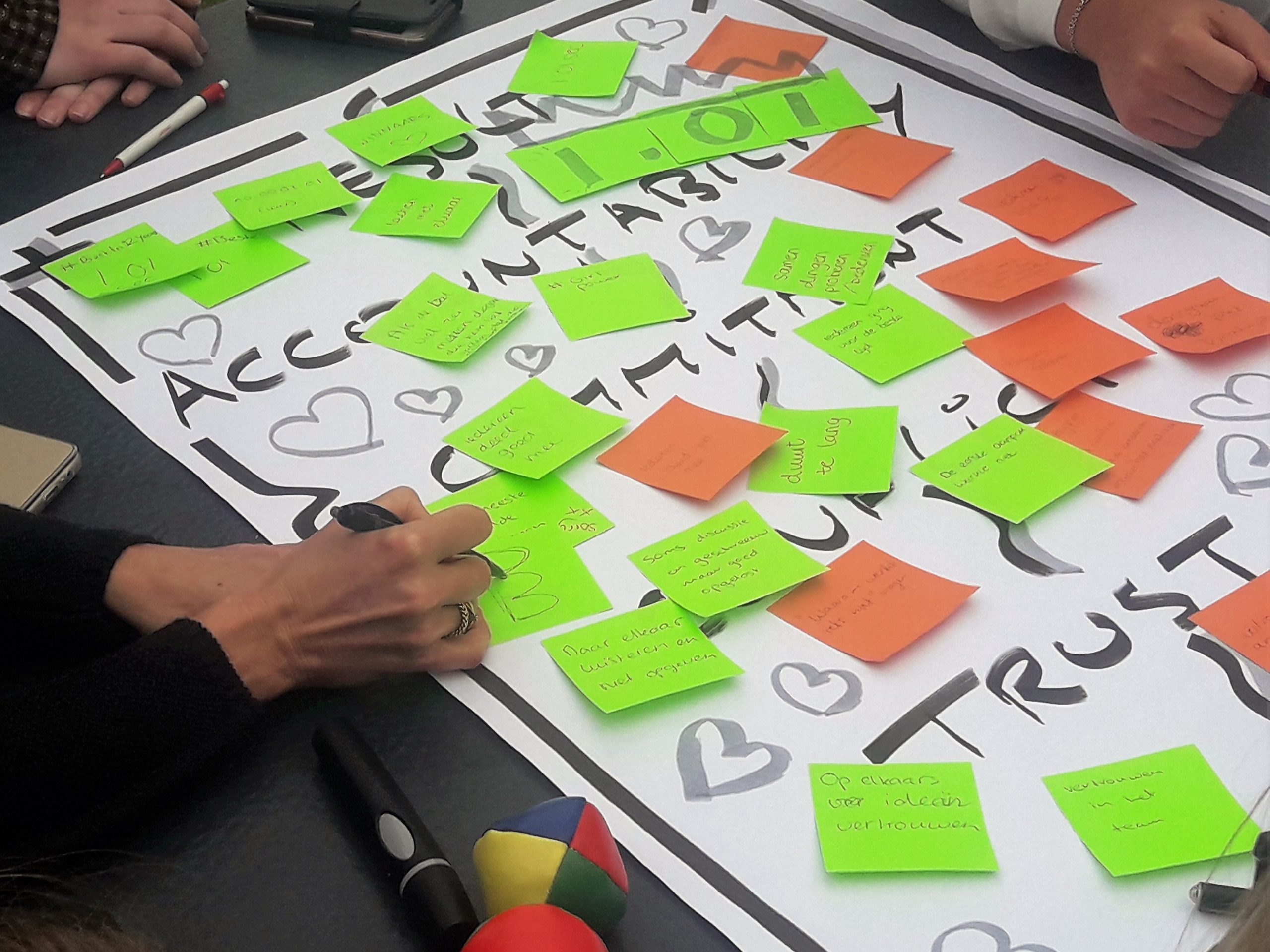
The Five Behaviors® as we often draw it in our sessions

Three Ways to Work with The Five Behaviors®

Every option combines practical team challenges, honest conversations, and the insights from the assessment. The difference is how deep you want to go and how much time you take.

5B Intro Session

Introduction · one session

In this 2-4H session we dive into the 5 Behaviors, exploring from a bird’s-eye perspective and then experiencing it with a challenging team activity. The team explores its current dynamics, identifies strengths and friction points, and chooses concrete areas to improve.

Your team explores

  • A shared framework for teamwork
  • An engaging team challenge
  • Insight into your team’s strengths
  • Discussion about steps forward

Deep Dive Workshop

Assessment · debrief · team session

Each team member completes a personal Five Behaviors assessment and has a debrief call before the team session. This puts everyone on an even footing. The live session combines team challenges, small-group conversations, and a practical review of the team. Useful when a team already knows where it needs to develop. The Personal Development report is very useful for people who operate in multiple teams.

Your team explores

  • 5B Personal Development Report
  • Deeper understanding of your own strengths and development areas
  • A shared framework for teamwork
  • Several engaging team challenges
  • Insight into your team’s strengths
  • Discussion about steps forward

Team Journey

Usually 3 to 6 months · monthly half-day sessions

The team works through the model from the ground up, one behavior at a time. After a kickoff and the team assessment, we explore the scores together and move from trust to conflict, commitment, accountability and results. Each session combines activities, honest conversation and clear agreements to practice before the next one. An optional quarterly check-in keeps the team making time for its own development.

Your team explores

  • The 5B Team Development Report and your team’s scores
  • Vulnerability-based trust and productive conflict
  • Clear commitments and holding each other accountable
  • Team agreements and norms you build together
  • A progress report that shows how far you’ve come

See what a Team Journey looks like ↓

What a Team Journey Looks Like

A team journey usually consists of up to six half-day sessions in person, about a month apart. Each session builds on the last, following the model from the ground up.

Every session combines interactive activities, honest conversations and practical agreements, such as action plans, conflict ground rules or team standards. DiSC® styles are woven throughout, and Everything DiSC® on Catalyst can deepen the conversations between sessions.

The outline is a starting point. The final content follows your team’s goals, its Five Behaviors® scores, and what happens along the way.

We start with why you are here and what the team wants to achieve. We explore what makes a team different from a work group, walk through the five behaviors, and use a team activity to predict where the team expects to score. We agree on expectations and ground rules, and introduce the assessment that everyone completes before the next session.

The moment the team sees its own scores. We look at strengths and challenges together, explore vulnerability-based trust through an activity, and see how your DiSC® styles influence trust. We close with a Start, Stop, Continue exercise and the first action points.

We check progress on the action points and explore what productive conflict looks like, and how your DiSC styles shape the way you handle it. Through an activity on healthy and unhealthy conflict and personal triggers, the team creates its own conflict ground rules.

Commitment means clarity and buy-in. We reflect on how the team handles conflict now, work on shared priorities through an activity, and agree on concrete actions. We also introduce accountability as the next step.

We explore the difference between conflict and accountability, practice peer-to-peer feedback, and look at how the team keeps its focus on shared results. Together with the team leader, we decide when the team is ready for its progress report.

The team retakes the assessment and we reveal the progress report: what has improved, where there is still room to grow, and what the team wants to focus on next. The content of this session follows the new scores.

Why The Five Behaviors®?

The Five Behaviors® assessments, developed by Wiley with Patrick Lencioni, are some of the most impactful and effective tools we have encountered, and they work as well virtually as they do live.

The model is simple enough to remember after one session, and rich enough to keep working with for months. It gives teams a shared language for topics that are otherwise hard to raise, such as trust, conflict, and holding each other accountable.

As an Authorized Partner of The Five Behaviors®, a Wiley brand, SteadyTeams provides access to the official assessments, licensed materials, and certified facilitation. We combine them with our own experiential style: team challenges that let you feel the dynamics in real time, followed by honest conversations about what happened. The assessment is powered by Everything DiSC®, so it connects naturally if your team already knows its DiSC styles.

Read the Five Behaviors® research report (PDF)

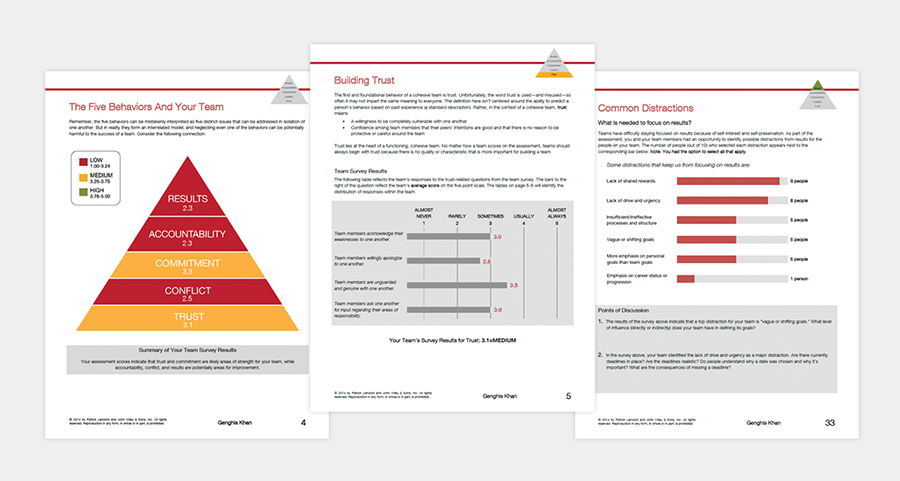
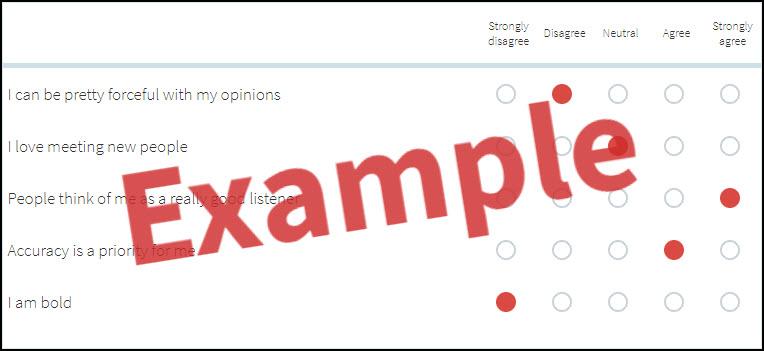
Example of Five Behaviors® assessment questions.

The Five Behaviors® Reports

Both reports are powered by Everything DiSC®, so they also show how each person’s style influences the way they contribute to the team.

TheFiveBehaviors-Pyramid-045

Personal Development,
discover how you show up in a team

Great teamwork starts with understanding your own contribution. The Personal Development report gives you a personalized view of how your natural style influences trust, conflict, commitment, accountability, and results.

It helps you recognize where you naturally contribute to strong teamwork, where you may unintentionally hold back, and what you can do differently, with practical suggestions you can apply in any team you work with.

Example 5B Personal Development Report

TheFiveBehaviors-Pyramid-029

Team Development,
see how your team really works together

Every team develops its own patterns. Some help the team perform, while others quietly get in the way. The Team Development report makes those dynamics visible by combining the perspectives of all team members into a shared picture of where the team is strong and where there is room to grow.

It gives the team concrete data and a common language for topics that can otherwise be difficult to discuss. A progress report can later show how the team has developed.

Example Team Progress Report

Questions about The Five Behaviors®

Thinking about The Five Behaviors® for yourself or your team? Here are answers to some questions you may have before we talk.

The Five Behaviors® helps your team look at the behaviors that make teamwork work: trust, conflict, commitment, accountability, and results. Can people admit a mistake? Do they challenge each other’s ideas, or stay quiet in the meeting and complain afterwards? Who speaks up when agreements are not kept? Exploring these questions together helps your team see where it is already strong and where the next gains can be made.

We combine team challenges with conversations about your team report. You experience the behaviors in real time, look at what happened, and connect it to how you work together every day. We work with situations from your team and make time to practice, so you leave with things to try in your everyday work.

The Five Dysfunctions of a Team is Patrick Lencioni’s best-selling book. The Five Behaviors® is the program Wiley developed with him, with its own research, assessments, personalized reports, and development materials. We are an Authorized Partner of The Five Behaviors® and use these resources alongside our own activities and facilitation, connecting the insights to what your team wants to work on.

No. Many teams we work with are doing well and want to get better at what matters under pressure: honest conversations, clear decisions, and shared results. The model helps you see what is already working and where a small change could make a real difference. When collaboration has become difficult, it gives the team a shared language to explore what is happening.

Trust, conflict, commitment, accountability, and results. They build on each other like a pyramid. Without trust, people avoid conflict. Without healthy conflict, commitment stays shallow. Without commitment, people hesitate to hold each other accountable. And without accountability, individual goals take over from the team’s results. That is why we work through the model from the ground up.

For an intact team that works together regularly, the Team Development report is usually the best place to start. It brings everyone’s perspective together in one picture of how the team works, and a progress report can show how that changes over time. If you work across several teams, or want to start on your own, the Personal Development report fits better. Tell us what is happening in your team, and we can work out which report would help.

Yes. The Five Behaviors® assessment is powered by Everything DiSC®, so your DiSC style comes back in your report and shows how it influences the way you contribute to the team. We would first want to hear what you remember from DiSC and how you have used it. From there, we look at what The Five Behaviors can add.

Our Five Behaviors programs usually range from six hours to multiple days spread over several months. The time we spend together depends on your team’s questions and how much you want to explore. With sessions spread out, you can try things in your daily work and bring those experiences into the next conversation. The assessment itself takes about 20–30 minutes.

One session can give your team a shared language and a clear picture of where it stands. Whether that is enough depends on your goal. Building trust and accountability takes practice, so it helps to come back together after some time. What changed? Where do we still hold back? That is where follow-up coaching and a progress report can help.

Yes, we facilitate in both Dutch and English, and the reports are available in both languages. We work with Dutch-speaking teams and international groups, and agree on the language beforehand. What matters is that people can take part in the activities and express themselves comfortably in the conversations.

We usually combine both. Assessments and individual debrief calls are usually online, while team sessions take place in person, in the Netherlands and nearby regions. The team challenges work best when you are in the same room and can experience the behaviors together.

Yes. The Personal Development report with a one-to-one debrief is designed for individuals. We talk through what you recognize in your report and connect it to your own questions about teamwork. You might want to understand your role in a team, prepare for a new role, or explore why some conversations feel harder than others. Read more about the personal debrief.

The cost depends on your group size, the reports we use, and the time we spend working together. Let us know who the program is for and what you have in mind. We will discuss the options and provide a proposal that makes clear what is included, from preparation and assessments to sessions and follow-up.

Get in Touch

Whether you want to strengthen trust and accountability in your team or better understand your own contribution, we can help you find a useful starting point. Schedule a call to talk it through, book a personal Five Behaviors® debrief, or send us your question.

Explore Other Ways to Look at Your Team

Every lens shows something different. Within our progress-focused approach, we often combine them around your team’s question.

Progress-Focused Team Coaching

Our core approach: we help your team think in terms of what works and take practical steps forward.

Everything DiSC®

A shared language for how people prefer to communicate, make decisions, and work together.

Scale of Cooperation

A roadmap for how your team works together, from struggling and avoiding to cooperating.

SteadyTeams | The Five Behaviors®