Everything DiSC

Everything DiSC®

Communication Preferences

People have different preferences in how they communicate, make decisions, and work with others. When you understand those differences, everyday collaboration becomes easier to talk about.

One person wants to move quickly. Another wants time to think. Some people develop ideas by talking; others prefer to prepare before speaking. These differences can be useful when a team knows how to work with them.

Our Everything DiSC® sessions combine personal insights, practical activities, and honest conversations to help your team explore how to adapt and connect. It gives each person language for their own style, and for how they work with others.

We have run this journey with dozens of teams and it consistently opens up practical, respectful conversations about how people prefer to communicate and collaborate.

How do DiSC preferences show up?

One person wants to move quickly. Another wants time to think. Some people develop ideas by talking; others prefer to prepare before speaking. These differences can be useful when a team knows how to work with them.

In Meetings: Who wants to explore possibilities, and who wants to reach a decision? Some people think by talking; others need a moment to consider their response. Understanding those differences helps you make room for everyone’s contribution while keeping the conversation moving.

When Taking Feedback: What helps each person hear the message and respond openly? A direct approach can feel clear to one colleague and abrupt to another. Exploring what works for each of you helps you give feedback that is both honest and useful.

In Everyday Work: How much detail, discussion, or thinking time does someone need? What feels like a clear instruction to you may leave someone else with questions. Talking about these preferences makes it easier to agree on what you need from each other.

When Things Change: Who is ready to try something new, and who wants to understand the implications first? Some people see possibilities straight away; others notice the questions that still need answering. Making room for both helps your team move forward with a more considered approach.

Under Pressure: What happens to your communication when time is short or the stakes are high? You might become more direct, take over, or go quiet. Recognizing these reactions helps you check what colleagues need instead of jumping to conclusions about their intentions.

Workplace Priorities & EQ Mindsets

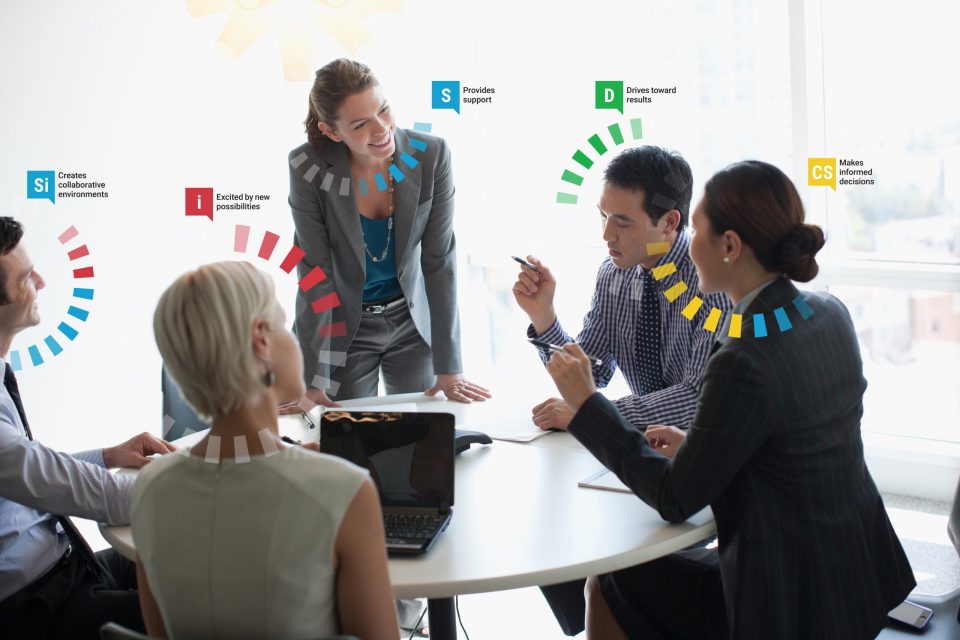
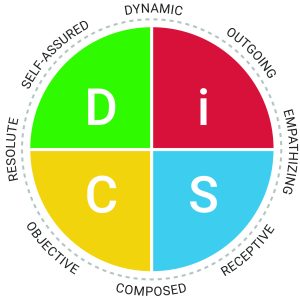
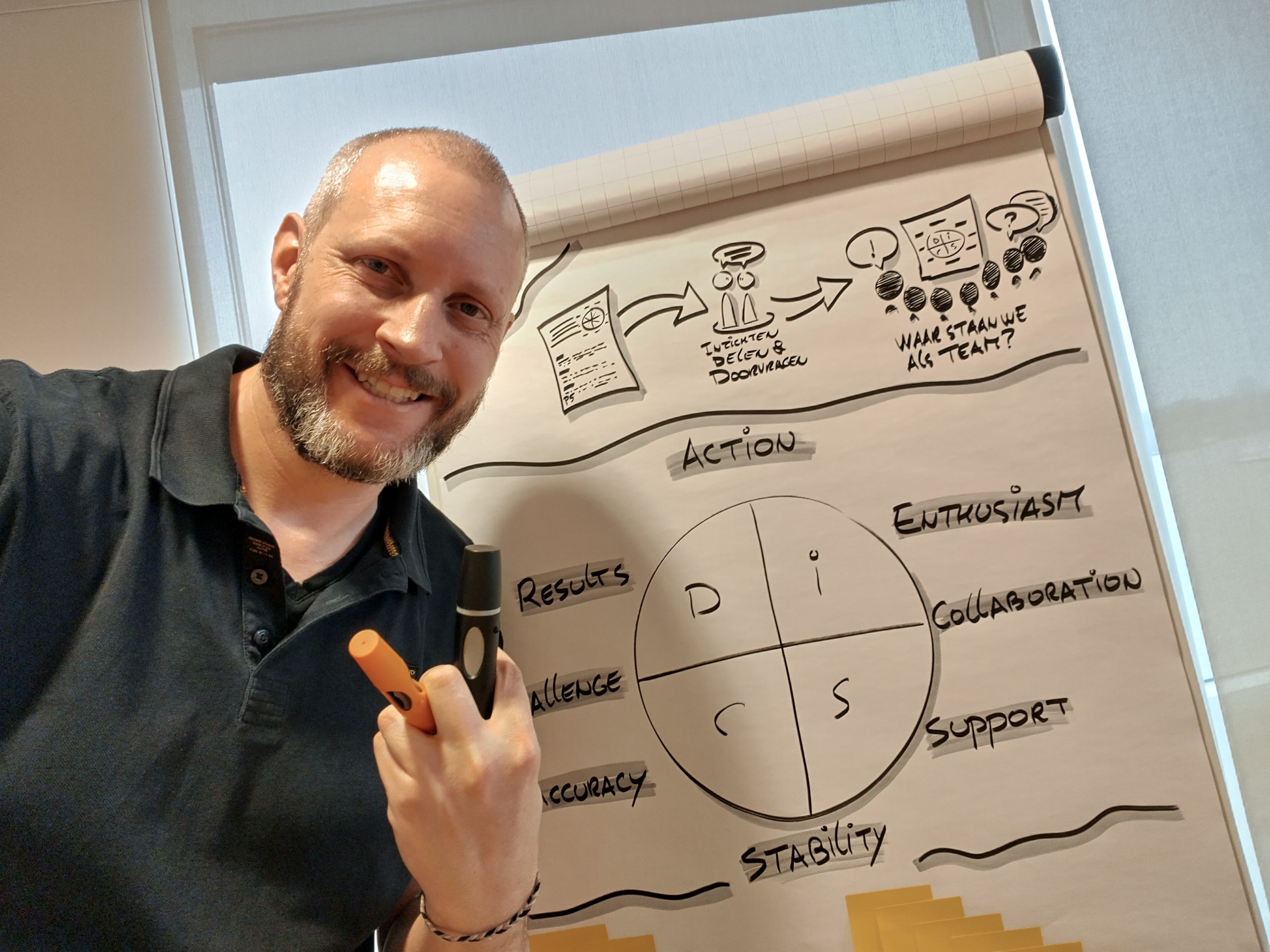
Everything DiSC measures behavioral preferences across eight scales, exploring both the four core styles and the blends between them. This creates a detailed foundation for understanding how you approach your work and your interactions with others.

The Workplace priorities and Agile EQ mindsets build on that foundation from different perspectives. Priorities describe where you tend to focus your energy at work, while mindsets explore how you respond to emotional and interpersonal situations—and how you can develop a wider range of responses.

Below, we bring these perspectives together around the DiSC map. Explore what comes naturally to you, what others may bring, and where a different approach could help you work more effectively together.

An Action priority means putting energy into getting started, moving quickly, and making progress. The Dynamic mindset helps you initiate movement, communicate enthusiasm for an idea, and encourage others to get involved. Together, they offer a useful way to explore how you create momentum and how you bring people with you when something needs to happen.

An Enthusiasm priority means focusing on possibilities and generating excitement about what could be achieved. The Outgoing mindset helps you reach out, build relationships, and express your thoughts and feelings openly. These can be particularly useful when welcoming new colleagues, making connections across a team, or helping people feel more comfortable contributing.

Focussing on Collaboration means valuing shared effort, involving others, and working toward solutions together. The Empathizing mindset helps you understand what someone may be feeling and respond with care. Exploring both encourages you to look beyond participation alone and consider people’s experiences. For example, noticing when a colleague feels unheard and taking time to understand why.

A Support priority means putting energy into helping others and being someone colleagues can rely on. The Receptive mindset helps you listen openly, consider unfamiliar perspectives, and make room for other people’s preferences. Both are useful when a team needs cooperation and flexibility, such as when you reconsider your preferred approach after hearing what would help someone else

A Stability priority means valuing dependable processes, a steady pace, and a predictable working environment. The Composed mindset helps you pause, manage your reactions, and respond thoughtfully when pressure rises. Together, they provide a starting point for exploring how you bring steadiness to difficult situations, including moments when circumstances change and predictability is no longer available.

An Accuracy priority means focusing on quality, precision, and getting things right. The Objective mindset helps you examine evidence, question your assumptions, and distinguish what you know from how you feel about it. These are useful when evaluating options or investigating a problem, helping you reach a considered judgment while remaining willing to revise your conclusions.

A Challenge priority means questioning assumptions, examining weaknesses, and testing whether an approach makes sense. The Resolute mindset helps you raise difficult issues and maintain your position when you meet resistance. Together, they can help you address a concern that others would rather avoid, explain why it matters, and persist long enough for it to receive proper attention.

A Results priority means focusing on outcomes, achievement, and making an impact. The Self-assured mindset helps you trust your abilities, express your views clearly, and take responsibility when direction is needed. Both can be useful when a team needs a decision or someone to step forward, while leaving room for others to contribute their expertise.

What comes naturally is your starting point.

Every mindset has value. The skill is recognizing what a situation needs and choosing your response. Some will come naturally to you, and for others you will  stretch beyond your usual approach.

Model shown: Everything DiSC® Agile EQ™ by Wiley.

Why Everything DiSC®?

We wanted a solid assessment and report to combine with out own typical style of facilitation. Everything DiSC gives people a detailed, personal starting point for exploring their behavior and useful ways to translate that insight into everyday working relationships.

But honestly, we decided to become an Everything DiSC® Authorized Partner because they have the best assessment tool we’ve found so far. I can get all nerdy on it, but behind the scenes it is absolutely awesome. With likerd scales and adaptive testing on eight scales it really rises above other DiSC assessments without loosing its practical application.

It’s reports come in many different languages and they have a full suit of tools to help teams and leaders evolve their way of working. Oh and they have a fully interactive website version Catalyst where, if you choose to use it, participants can continue exploring their insights and ways of working with colleagues after the session. As far as DiSC models go, I’m a fanboy.

Explore the Everything DiSC reports

Understand your workplace priorities and how they shape your communication and collaboration.

Your personal report explores what motivates you, what causes you stress, and it provides practical tips for working with colleagues whose preferences differ from yours. It’s a great tool for conversations within teams.

Example Workplace Report

Discover how your management style influences the people you lead.

Your report explores how you direct, delegate, motivate, and develop others, with practical guidance for adapting your approach to each person and working with your own manager.

Example DiSC Management Report

Explore how you respond to emotional and interpersonal challenges.

Your report identifies the EQ mindsets that come naturally to you and offers practical steps to develop less familiar responses. Great for those who are already familiar with regular DiSC.

Example Agile EQ Report

Explore how you create a vision, build alignment, and turn plans into action.

Your report connects your personal tendencies to leadership practices, helping you identify strengths and choose concrete areas to develop as you lead a team or organization.

Example Work of Leaders Report

Understand what happens to your behavior when disagreement becomes uncomfortable.

Explore your own natural responses to conflict and recognize automatic thoughts, rethink unhelpful assumptions, and choose more constructive ways to engage with your colleagues.

Example Productive Conflict Report

Explore how you and a colleague approach work, communication, and decisions.

Drawing on both of your DiSC profiles, this report highlights similarities, differences, and potential friction. Giving practical insights and strategies you can both use to improve your cooperation.

Example Comparison Report

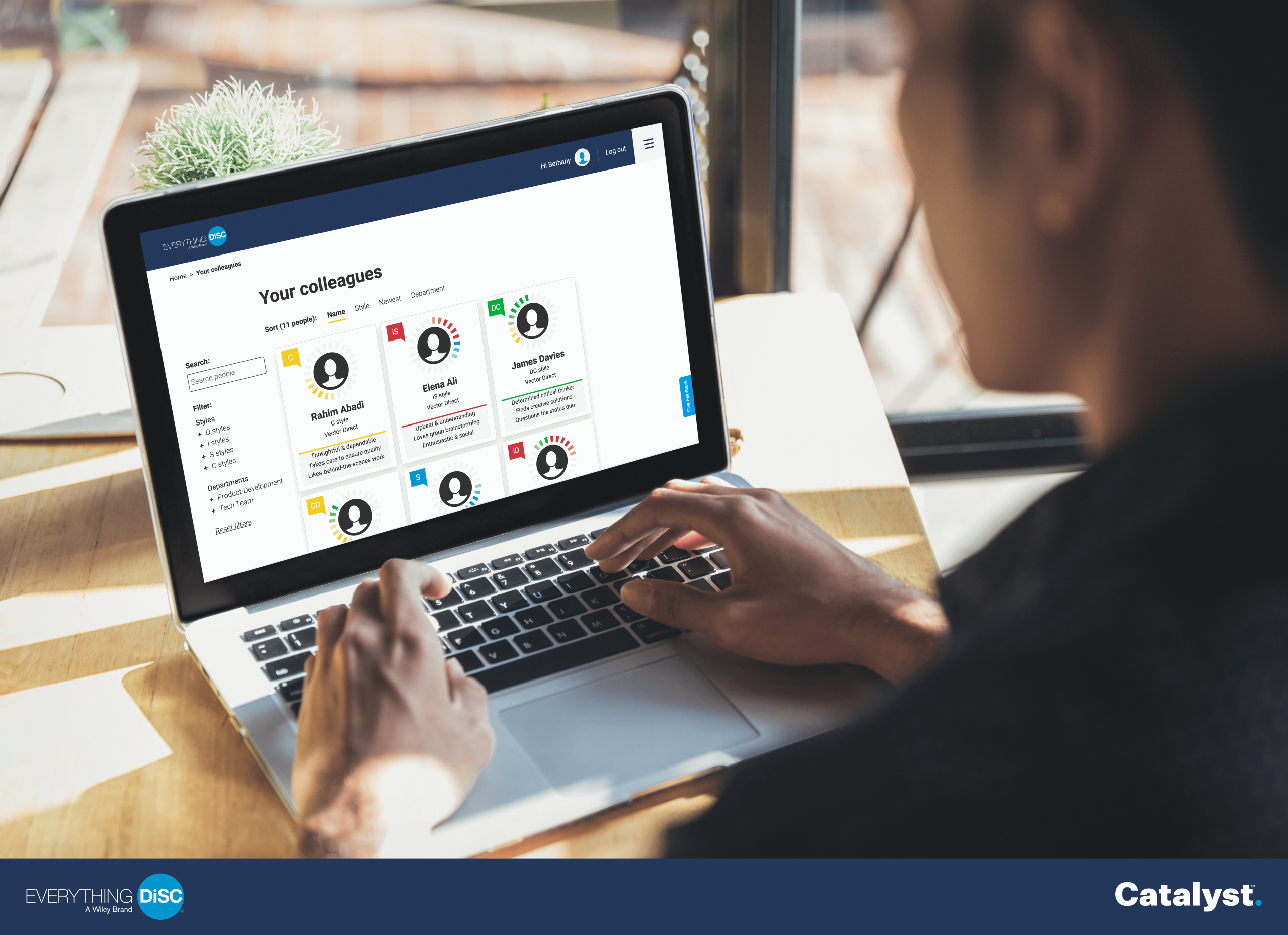
NEW! Everything DiSC on Catalyst Web-Platform

Keep exploring what helps you work well together. Catalyst brings your personal DiSC insights into an online learning platform where you can explore your profile, compare preferences with colleagues, and find practical suggestions for working with each other. It gives your team a resource to return to as you put insights from a session into practice.

  • Your insights in one place: Easily revisit your DiSC profile and explore your preferences, priorities, and working style.
  • Understand your colleagues: Compare your styles and explore where your approaches align or differ.
  • Practical advice for working together: Find personalized suggestions for communicating and collaborating with specific colleagues.
  • Prepare for conversations: Consider what another person may need before a meeting, feedback conversation, or new assignment.
  • Explore your team’s dynamics: Use group maps to discuss shared tendencies and the different perspectives within your team.
  • Continue learning after a session: Return to the platform as new questions and situations arise, helping you put your insights into practice.

Questions about DiSC and working with us

Thinking about DiSC for yourself or your team?
Here are answers to some questions you may have.

DiSC gives your team a language for exploring differences in how people work and communicate. Why does one colleague want to decide quickly while another keeps asking questions? What helps someone speak up or hear feedback? Understanding those preferences helps you discuss friction, appreciate each other’s contributions, and agree on what could work better.

We combine practical activities with conversations about your profiles and your work together. You explore what you recognize, where colleagues see things differently, and what happens when those preferences meet. We work with situations from your team and make time to practice, so you leave with things to try in your everyday work.

DISC is a behavioral model used by different assessment providers. Everything DiSC is a specific assessment and learning experience, with its own research, personalized reports, and development materials. We are an Everything DiSC Authorized Partner and use these resources alongside our own activities and facilitation, connecting the insights to what your team wants to work on.

We use DiSC to stay curious about each other. Everyone is a blend of styles, and your experience, role, and circumstances also influence how you behave. During a session, there is room to question your profile and add context. Understanding your preferences also means exploring where adapting your approach could help.

The eight priorities are Action, Enthusiasm, Collaboration, Support, Stability, Accuracy, Challenge, and Results. They describe where you tend to direct your energy at work. Exploring them together helps you understand what matters to your colleagues—for example, why one person wants to get started while another wants to check the details first.

For teams wanting to explore everyday communication and collaboration, Workplace is often a good place to start. Other reports focus on emotional agility, management, conflict, leadership, or sales. The choice depends on what you want to work on. Tell us what is happening in your team, and we can work out which report would help.

Yes, and we would first want to hear what you remember and how you have used it. Which assessment did you take? What conversations did it lead to? What has stayed with the team? We can look at your existing reports and discuss where to take the learning next, including whether another assessment would add anything.

Our DiSC programs usually range from six hours to multiple days spread over several months. The time we spend together depends on your team’s questions and how much you want to explore. With sessions spread out, you can try things in your daily work and bring those experiences into the next conversation.

One session can help people understand each other better and agree on changes they want to make. Whether that is enough depends on your goal. If you want to work on recurring patterns, it helps to come back together after some practice. What became easier? What still needs attention? That is where follow-up coaching can help.

Yes, we facilitate in both Dutch and English. We work with Dutch-speaking teams and international groups, and agree on the language beforehand. What matters is that people can take part in the activities and express themselves comfortably in the conversations.

We usually combine both. Assessments and individual debrief calls are usually online, while team sessions take place in person. We also offer follow-up webinars around specific topics. These give your team a chance to bring questions and experiences from work, revisit what you learned, and explore what needs further practice.

Yes. You can book an assessment with a personal debrief. We talk through what you recognize in your report and connect it to your own questions about work and collaboration. You might want to understand a particular working relationship, prepare for a new role, or explore how others experience your approach.

The cost depends on your group size, the assessments we use, and the time we spend working together. Let us know who the program is for and what you have in mind. We will discuss the options and provide a proposal that makes clear what is included, from preparation and assessments to sessions and follow-up.

Get in Touch

Whether you want to strengthen communication in your team or better understand your own approach, we can help you find a useful starting point. Schedule a call to talk it through, send your question using the contact form, or book a personal DiSC assessment to explore your own preferences and working relationships.

Explore Other Ways to Look at Your Team

Every lens shows something different. Within our progress-focused approach, we often combine them around your team’s question.

Progress-Focused Team Coaching

Our core approach: we help your team think in terms of what works and take practical steps forward.

The Five Behaviors®

Build a cohesive team layer by layer, from trust to shared results.

Scale of Cooperation

A roadmap for how your team works together, from struggling and avoiding to cooperating.

SteadyTeams | Everything DiSC