Scale of Cooperation

Scale of Cooperation

A Roadmap for Teams

Why does one team run like clockwork while another doesn’t function at all? The Scale of Cooperation gives your team a roadmap and a shared language to understand how you are working together, and what the next step could be.

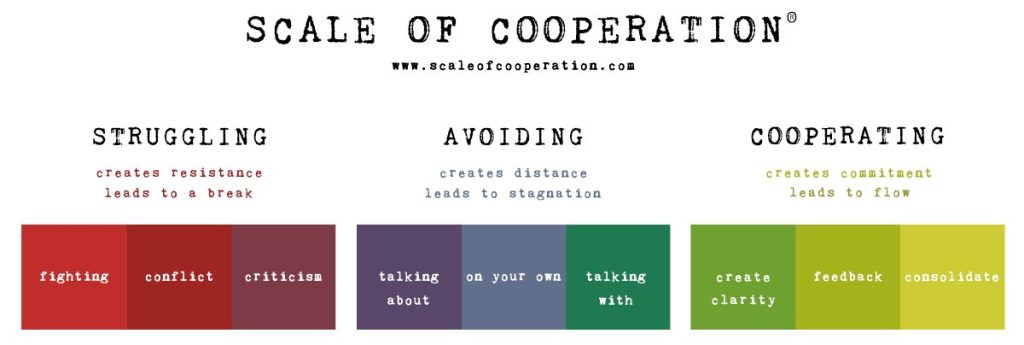
The Scale describes three worlds of cooperation: struggling, avoiding, and cooperating. Each world has its own pull. Behavior invites behavior, so teams tend to stay where they are until someone takes a different step. Seeing that pattern together is often the moment things start to move.

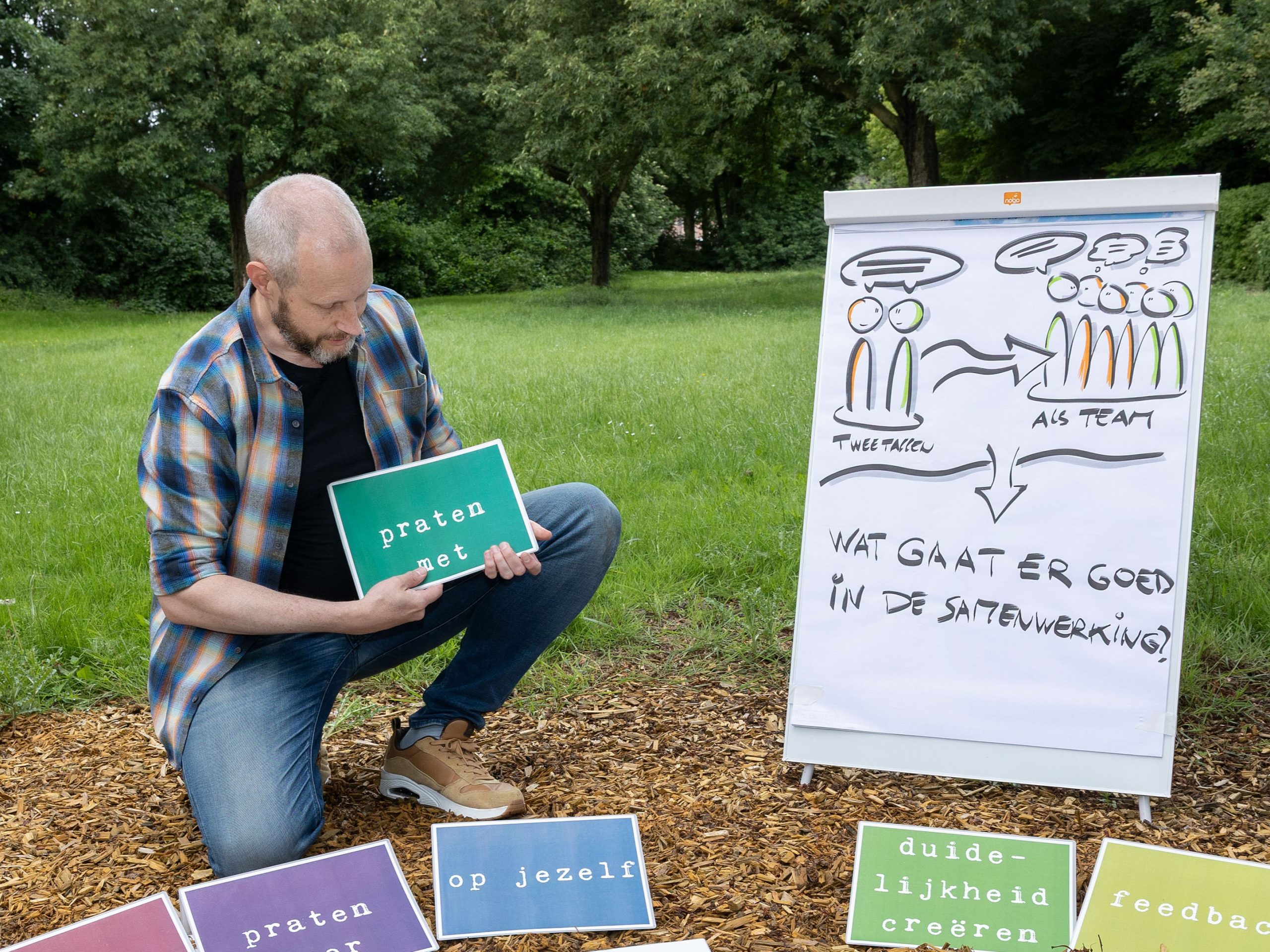
Our way of team coaching with the Scale is very experiential. We combine team challenges with exploring the Scale, so your team experiences the worlds of cooperation instead of only talking about them.
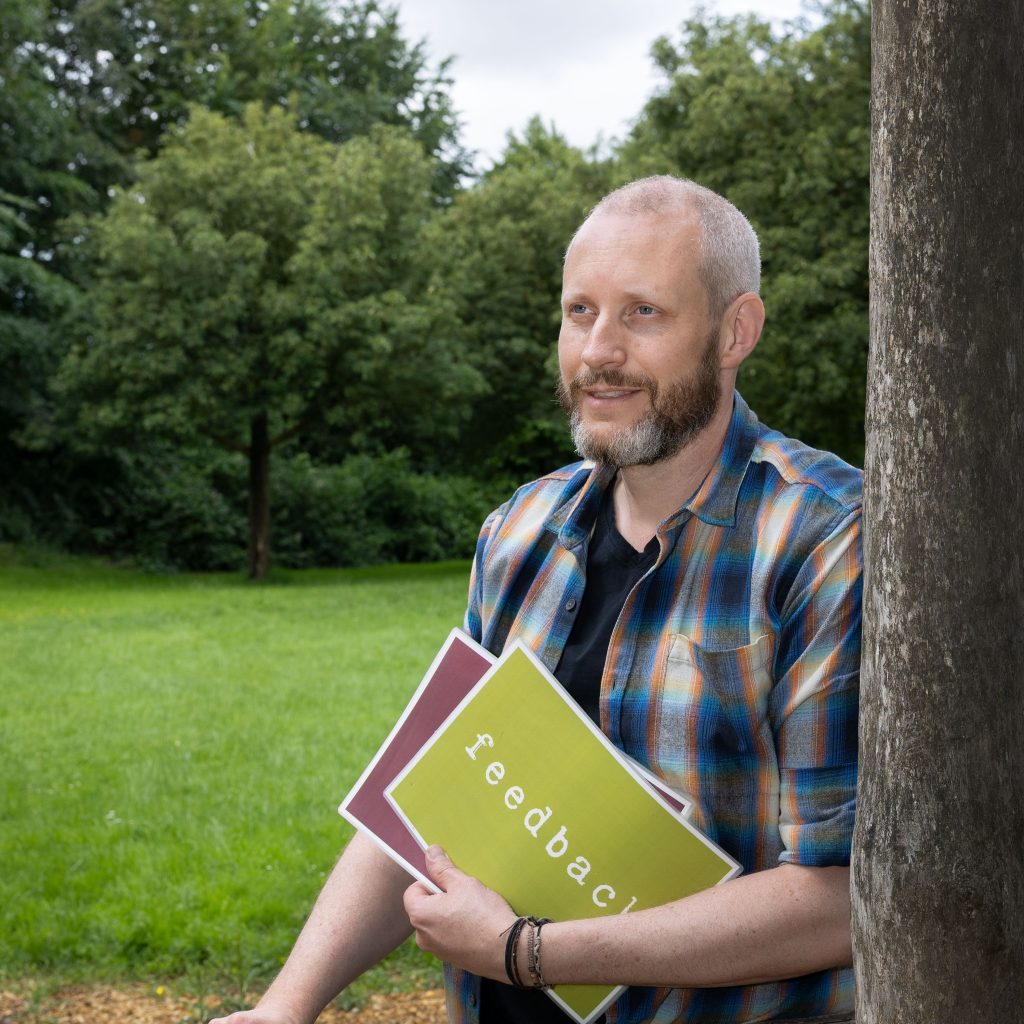
SteadyTeams is a certified Scale of Cooperation partner.

Which Teams Benefit?

Wherever your team is on the Scale, there is always a next step. These are the situations we meet most often.

Teams that cooperate well and want to keep it that way

Good cooperation is never finished. Teams that are doing well use the Scale to understand what makes it work, celebrate it, and stay sharp when pressure rises or the team changes.

Teams where cooperation is not going as hoped

Recurring frustration, topics nobody raises, or people working more and more on their own. The Scale helps the team name what is happening without blaming anyone, and find a first step forward.

New teams and project teams

A new team or project is the moment to set the tone. The Scale gives everyone the same language from the start, so expectations about cooperation are discussed before misunderstandings appear.

Teams under pressure or in change

Under pressure, every team falls back on familiar patterns. Understanding which world those patterns belong to helps a team respond differently when it matters most.

Three Worlds of Cooperation

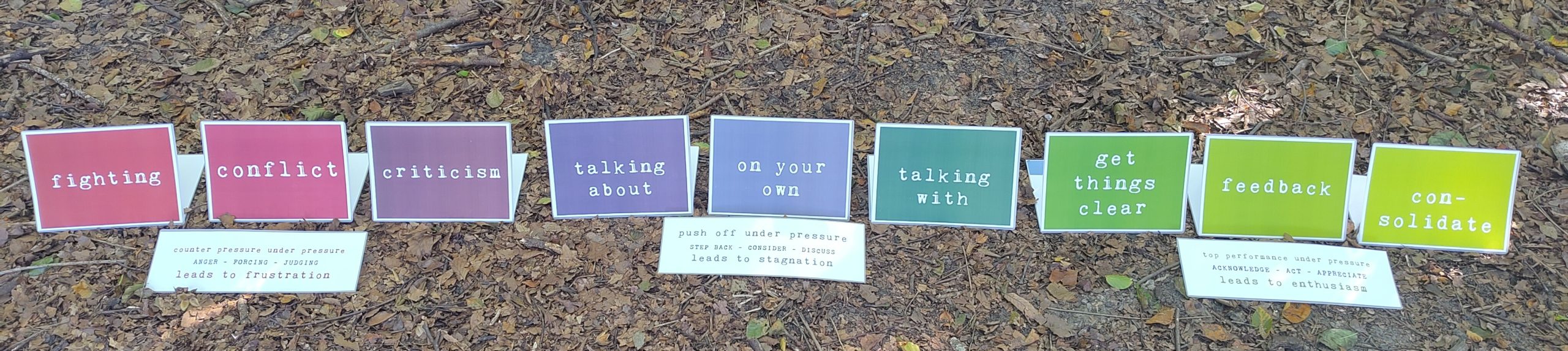
The Scale describes three worlds, three ways you might be experiencing the cooperation with others.
A team rarely sits in one place, instead a team moves on the scale continuesly,
depending on the people involved, the topic and the pressure they are under.

Struggling

Fighting · Conflict · Criticism

Under pressure: counter pressure
Typical reactions: anger, blame, judgment
Creates: resistance
Leads to: frustration

The struggling behaviour propagates continuous struggling behaviour. One focuses on 'we vs they': 'Are you with us or against us?' Conflict constantly lurks around the group. When you face each other, the hair gets bristled. Who will win this fight? Struggling behaviour creates resistance.

Avoiding

Talking about · On your own · Talking with

Under pressure: pushing off
Typical reactions: tolerating, considering, discussing
Creates: distance
Leads to: stagnation

If one person is avoidant, the probability is high that someone else will become the same: sentences like 'I will take my time with this decision'. And 'I say 'yes' (but it will take a while and I might do 'no'). In this world, we give each other vague hints and complain about each other. Avoiding behaviour creates distance.

Cooperating

Creating clarity · Feedback · Consolidating

Under pressure: high performance
Typical reactions: acknowledging, acting, appreciating
Creates: trust
Leads to: enthusiasm

In a cooperative setting, everyone feels the energy to keep the momentum going optimally. If someone 'slips' they are quickly supported by others to get back on track: 'Let's do it together, we need you!' There is an incentive, you are appreciated. Working on something, alone or together, gives energy. Cooperative behaviour creates trust.

How the Scale Helps a Team Move

The Scale is a simplification, and that is exactly what makes it useful. It shows where your team stands and what the first step could be.

  • Behavior invites behavior. Struggling behavior invites more struggling, and when one person avoids, others often follow. Cooperative behavior is contagious too.
  • Small steps, one position at a time. You don’t jump from struggling to cooperating in one go. The Scale shows the next position within reach, and what a first step there looks like.
  • From difficulties to possibilities. The Scale shifts the conversation from what is wrong to what is possible, which fits our progress-focused approach.
  • Three keys to move forward. Acknowledgement, accountability, and appreciation. The order doesn’t matter, but a team needs all three.

Three Practical Ways

Three practical ways for your team to work with the Scale of Cooperation.
Every option gives you practical team challenges and invites the team to have honest conversations.
The difference is how deep you want to go and how much time you take.

Scale Workshop

One session

An experiential introduction to the Scale. The team explores the three worlds through practical challenges, places itself on the Scale, and agrees on a first concrete step towards better cooperation.

Easily done within a 2-4 hour workshop or combined with other Team Sessions.

Team Journey

Several sessions over a few months

The team works with the Scale over time: exploring where it stands, practicing the next position in daily work, and reflecting on what changed. Each session builds on what the team tried in between.

Team Coaching with the scale as a roadmap helps the team to make meaningful progress.

Combined with Other Lenses

Part of a broader program

The Scale works well alongside other models like Everything DiSC® and The Five Behaviors® because they touch on similar topics of teamwork and human interaction but from very different angles.

People working together is a beautiful but also very complex thing. And is worth doing well.

What does your team need?

Every team is different, and you need  a different approach if you find yourself in the world of Struggle than in Avoidance or Cooperation.

For example, a team that finds itself a lot in avoidance can benefit a lot from figuring out how to talk with instead of talking about each other. And a team who is further in cooperation and is doing pretty well, can go from good to great by focusing on clarity, feedback and consolidation.

Together we’ll figure out where your team is, and align the team journey with where you are now, and where the team needs to go. Because of this, most teams will find the scale a useful tool to move forward.

“It took a moment, but we figured out what our joint needs are and what the other people in the team struggled with. Taking the time to connect and get to know each other was very useful, and the scale gave us a useful visual to see where we stand as a team.”

— A team of project managers working in a complex, knowledge-intensive environment.

Why do we like the Scale so much?

Teams recognize themselves in the Scale almost immediately. It is simple enough to use in everyday conversations, and rich enough to keep discovering new nuances.

The Scale was developed in the Netherlands as the Schaal van Samenwerking and has grown over almost thirty years of practice with teams. It is open source, has been translated into 13 languages, and is supported by an active community of team coaches. As a certified Scale of Cooperation partner, we combine the Scale with our own experiential style: team challenges that let you experience the worlds of cooperation, followed by honest and open conversations.

Questions about the Scale of Cooperation

Thinking about the Scale of Cooperation for your team?
Here are answers to some questions you may have.

The Scale gives your team a shared, visual language for how you work together. Why does a meeting turn into a debate about who is right? Why do some topics never get raised? What happens when the pressure goes up? Seeing your patterns on the Scale helps you talk about them without blaming anyone, and choose a small step towards better cooperation.

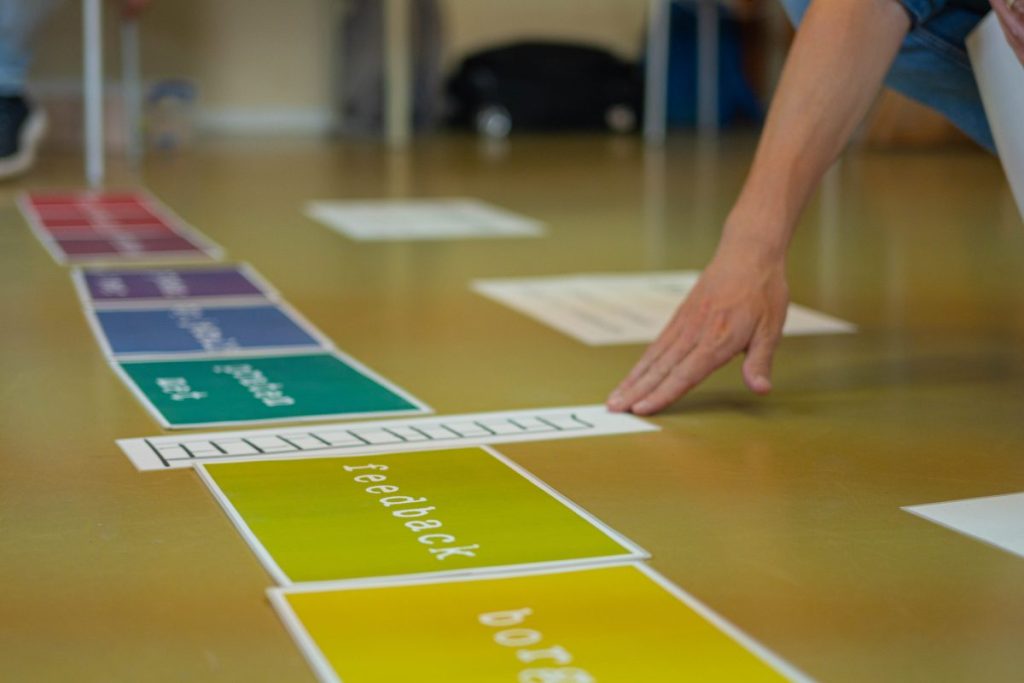
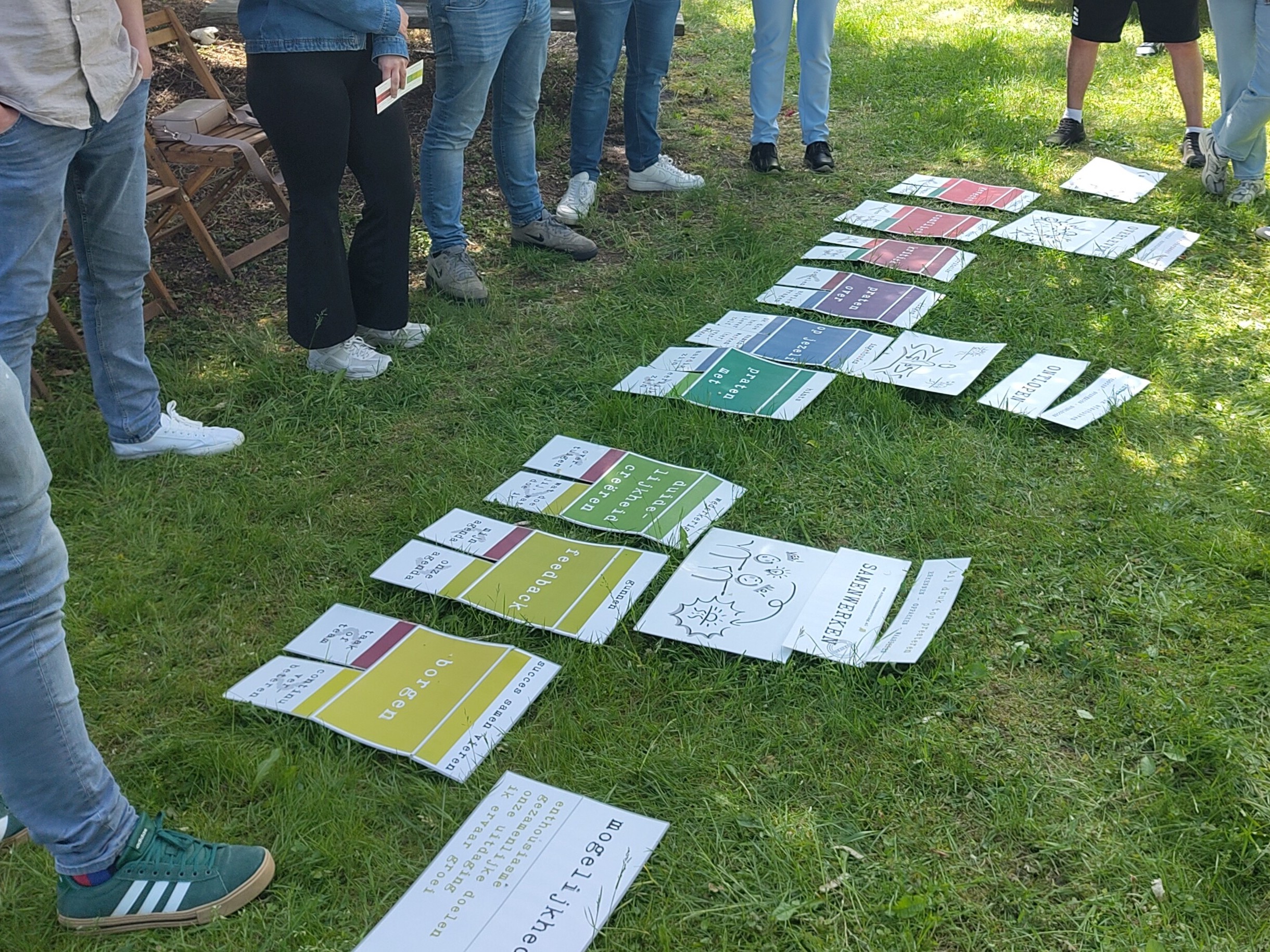
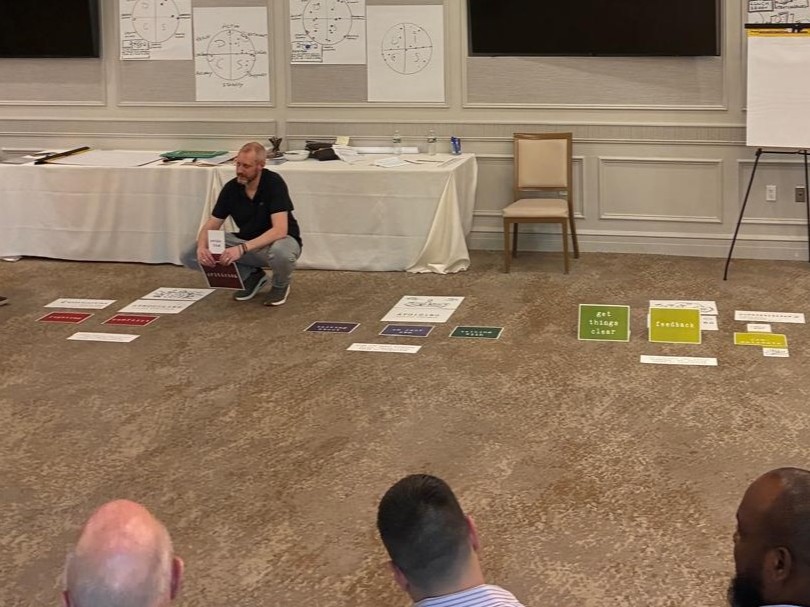
We lay out the Scale on the floor and work with it together. Through team challenges, you experience the different worlds of cooperation and notice what happens in your own team. You place yourselves on the Scale, look at what pulls you towards struggling or avoiding, and agree on a first step to try in your everyday work.

Struggling, avoiding, and cooperating. In the world of struggling, people work against each other, which creates resistance. In the world of avoiding, people work alongside each other and keep their distance. In the world of cooperating, people work together and build trust. Each world has three positions, and most teams move across a few of them, depending on the topic and the pressure they are under.

We use the Scale to stay curious about what happens between people. It describes behavior in situations, not people, and every team moves across several positions. During a session, there is room to question where you place yourselves and add context. What matters is the next step, not the label.

No. Teams that cooperate well use the Scale to understand what makes it work and to keep it that way when things get busy. New teams use it to set the tone from the start. And when cooperation has become difficult, it helps to name what is happening and find a way forward.

The Scale was developed in the Netherlands as the Schaal van Samenwerking and has grown over almost thirty years of practice with teams. It is open source and has been translated into many languages. SteadyTeams is a certified Scale of Cooperation partner. You can find more background on the official website, scaleofcooperation.com.

Yes. The Scale shows how cooperation is taking place in the team as a whole. Everything DiSC® looks at individual communication preferences, and The Five Behaviors® at the behaviors of a cohesive team. Within our progress-focused approach, we often combine them. Tell us what your team wants to work on, and we can work out which combination would help.

Our Scale of Cooperation programs usually range from six hours to multiple days spread over several months. The time we spend together depends on your team’s questions and how much you want to explore. With sessions spread out, you can try things in your daily work and bring those experiences into the next conversation.

One session gives your team a shared language and a first step to try. Whether that is enough depends on your goal. Moving to a new position on the Scale takes practice, so it helps to come back together after some time. Where did we manage to take a step? When did we slip back? That is where follow-up coaching can help.

Yes, we facilitate in both Dutch and English. The Scale itself started in Dutch and is available in many languages, which makes it easy to use with international groups. We agree on the language beforehand, so everyone can take part in the activities and express themselves comfortably in the conversations.

The Scale is very experiential, so team sessions take place in person, where the team can work with the Scale on the floor. Preparation and follow-up conversations can take place online. Participants also take home Scale materials, such as bookmarks, so the Scale stays part of everyday conversations.

Yes. You can explore the Scale in a one-to-one session. We look at the situations you recognize and connect them to your own questions about work and cooperation. You might want to understand a particular working relationship, prepare for a conversation with your team, or explore how your own behavior influences the cooperation around you.

The cost depends on your group size and the time we spend working together. Let us know who the program is for and what you have in mind. We will discuss the options and provide a proposal that makes clear what is included, from preparation to sessions and follow-up.

Get in Touch

Whether your team wants to keep cooperating well or is looking for a way out of struggling or avoiding, we can help you find a useful starting point. Schedule a call to talk it through, explore our team coaching, or send us your question.

Explore Other Ways to Look at Your Team

Every lens shows something different. Within our progress-focused approach, we often combine them around your team’s question.

Progress-Focused Team Coaching

Our core approach: we help your team think in terms of what works and take practical steps forward.

Everything DiSC®

A shared language for how people prefer to communicate, make decisions, and work together.

The Five Behaviors®

Build a cohesive team layer by layer, from trust to shared results.

SteadyTeams | Scale of Cooperation